
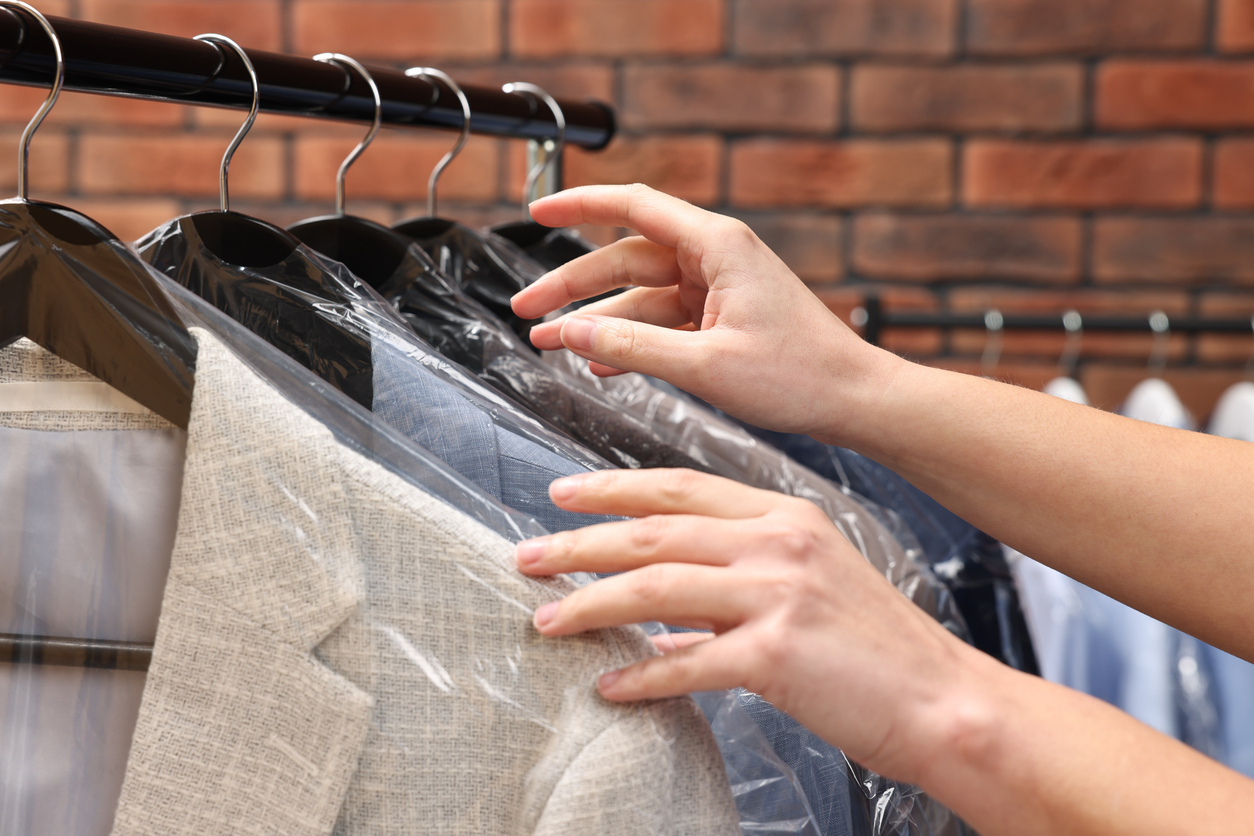
You already know dry cleaning exists. What you might not be sure about is which pieces in your closet genuinely need it, and which items you’ve probably been washing wrong. If you’re in Lely or anywhere in the Naples area and you own quality formalwear, professional clothing, or anything with a care label that makes you pause, this guide is for you.
Here’s a garment by garment breakdown of what belongs at a dry cleaner, why each piece benefits from professional dry cleaning, and what home washing quietly does to fabrics that can’t handle it.
Suits and Blazers: The Garments That Lose the Most to a Bad Wash
Can a Dry Cleaner Clean a Suit? Yes – More Importantly, Only a Dry Cleaner Should
A suit isn’t just fabric. It’s a constructed garment with canvas interlining that shapes the chest, shoulder padding that holds the silhouette, and a lapel roll that’s set during tailoring and maintained through careful pressing over time. Put a suit into a washing machine and here’s what you risk:
- Wool and wool blend fabric shrinks, even on a cold, delicate cycle.
- Lining and outer shells have different shrink rates, so they pull against each other and pucker.
- Canvas interlining can bubble or permanently shift out of position.
- Shoulder pads absorb water unevenly and collapse as they dry.
- Lapel roll collapses flat. The natural curve that gives a blazer its shape disappears.
You might not see the full damage after the first wash. By the second or third, it’s obvious. A $400 suit can come out of the machine looking like it belongs in a donation bin. The problem isn’t how carefully you washed it. It was never meant to be washed that way.
How Dry Cleaning Preserves the Structure and Finish of a Suit
Solvent based cleaning works without water, so there’s no shrinkage, no lining separation, no interlining movement. The internal structure of the suit stays exactly where it was constructed to sit. After cleaning, proper pressing on a suit form restores the original shape of the jacket, the crease in the trousers, and the drape of the lapels.
This isn’t just cleaning. It’s active preservation. A dry cleaned suit comes back looking like it did when you bought it. A home washed suit comes back looking like it needs to be replaced.
Silk, Satin, and Chiffon: Why Water Is the Wrong Tool for These Fabrics
Water Spotting and Dye Shift in Silk and Satin
Formal and occasionwear fabrics are where well meaning home care does the most damage. The people who ruin silk blouses or satin dresses aren’t careless. They used cold water, ran the gentle cycle, and still ended up with something unwearable.
Silk has a protein based fiber structure that responds to moisture unevenly. Even clean, room temperature water can leave permanent spotting because the fibers absorb and release it at different rates across the surface of the fabric. Satin dyes can fade or migrate when wet, and any friction makes it worse.
What this looks like in practice: You spill a few drops of water on a silk blouse while getting ready. You dab it dry. The water evaporates, but the spot stays. That discoloration is permanent. It’s not a stain. It’s structural damage to the surface of the fiber from water contact. The care label on a silk garment isn’t manufacturer caution. It’s a warning.
Chiffon and Organza: Why Agitation Is the Enemy
Open weave fabrics such as chiffon and organza are structurally vulnerable to movement. A washing machine’s gentle cycle still agitates. The drum rotates, fabric is compressed and released, seams are pulled in multiple directions. For a sheer formal piece, that’s enough to:
- Permanently distort the drape
- Pull and stretch seams out of alignment
- Create uneven sheerness that’s visible when worn
No temperature setting makes machine washing safe for these fabrics. The risk is agitation itself, not the heat. A dry cleaner handles these fabrics without water or mechanical agitation, which is the only way to clean them without compromising their structure.
Wool, Cashmere, and Merino: The Natural Fiber Investment Worth Protecting
Why Wool and Cashmere Shrink and Felt in the Wash
Premium knitwear is where the most avoidable mistakes happen. Wool and cashmere feel durable in everyday use, so it’s easy to assume they can handle a cold wash. They can’t.
Wool fibers are covered in microscopic overlapping scales. Under heat, moisture, and agitation, those scales lock together permanently. That process is called felting, and it is irreversible. Once those scales mesh, no amount of stretching, steaming, or conditioning separates them.
The numbers make this real:
- A cashmere sweater can lose 30% to 50% of its original size in a single wash cycle. A $200 sweater becomes toddler sized.
- Merino wool dress pants shrink unpredictably, often more in length than width, making them unwearable even if they technically still fit at the waist.
- A wool blazer felts across the surface, losing the smooth finish and developing a rough, matted texture that looks nothing like the original.
None of this happens because the garment was washed carelessly. It happens because that’s how the fiber responds when all three conditions are present at once.
How Dry Cleaning Preserves Softness and Fiber Integrity
Dry cleaning avoids water completely, so the fiber scales are never activated and felting doesn’t occur. It also preserves the natural lanolin and oils that give cashmere its distinctive softness, something repeated home washing strips out gradually even when the garment survives dimensionally.
Think of it as extending the life of the garment, not just cleaning it. A $200 cashmere sweater dry cleaned every three to five wears will still look and feel the same three or four years from now. One washed at home will pill, thin out, and lose its drape within a season or two. The dry cleaning cost is the cheaper option over the life of the piece.
Formal Gowns and Embellished Occasion Wear
Beading, Sequins, and Embroidery
Lely and the Naples area have a full social calendar. Galas, fundraisers, weddings, black tie dinners. The garments people wear to those events are often the most expensive pieces in their wardrobe with zero margin for error in care.
Embellishments on formal gowns are attached using hand sewn thread, heat set adhesive, or glued panels. Every one of those attachment methods weakens under water, agitation, or high heat.
A beaded gown washed at home risks:
- Bead and sequin loss from adhesive dissolving in water or sequins warping under heat
- Adhesive failure that leaves residue on the fabric and causes entire panels to separate from the base
- Embroidery thread damage from mechanical agitation pulling stitches loose, starting small and worsening with every wear
These garments don’t have a safe home washing option. Not delicate. Not hand washed in the sink. Not steamed. The question isn’t whether to dry clean them. It’s how soon after wearing them you bring them in.
After the Event: Why Timing Matters for Gown Care
A gown that looks clean the morning after an event may already have invisible problems. Sweat and body oils start breaking down fabric fibers immediately. Perfume residue reacts with fabric over time and causes discoloration that’s difficult to treat once it sets. Food and drink that didn’t leave an obvious stain are still present in the fabric.
The rule for formal pieces: Get it to a dry cleaner within a week of wearing it, even if it looks spotless. What you can’t see is already working against the fabric. For Naples and Lely residents who attend events regularly, building this habit protects pieces you’ll want to wear again and again.
The Real Benefits of Dry Cleaning Beyond Just Getting Things Clean
Stain Removal Home Washing Can’t Achieve
The benefits of dry cleaning go beyond what most people assume. Dry cleaning solvents dissolve oil based stains (grease, makeup, body oil, salad dressing, sunscreen) water and detergent can’t fully lift. Water spreads oil. Solvent breaks it down. That’s not a marginal difference. It’s a completely different mechanism.
A skilled technician also pretreats stains individually before the garment goes through the cleaning process. Stains that have partially set, those you might not even notice until you look closely, get caught and addressed during this step.
In Southwest Florida’s social and dining environment, where linen jackets and silk blouses show up at dinners and outdoor events regularly, that matters more than it would in a place where people dress casually year round.
Professional Pressing and Finishing as a Garment Quality Step
A dry cleaned garment returns pressed to a standard home ironing rarely matches, especially on structured pieces. Jacket lapels lay correctly. Trouser creases are sharp. Shirt collars lay flat without shine or edge distortion.
For professionals in Lely and Naples who appear in front of clients or colleagues regularly, that finish matters every time. A well pressed suit communicates something a wrinkled suit doesn’t, and no amount of home steaming replicates what a professional press achieves.
Quick Summary: Why Each Garment Needs Professional Care
| Garment | Why Dry Cleaning Is the Right Call |
|---|---|
| Suits and Blazers | Preserves canvas interlining, shoulder shape, and lapel roll. Water destroys all three. |
| Silk and Satin | Avoids water spotting and dye migration that even clean water can cause. |
| Chiffon and Organza | Protects open weave structure from agitation-caused distortion. |
| Cashmere and Wool | Prevents irreversible felting and preserves the natural oils that create softness. |
| Formal Gowns | Safely protects adhesive embellishments and removes invisible post-event residue. |
Preserves canvas interlining, shoulder shape, and lapel roll. Water destroys all three.
Avoids water spotting and dye migration that even clean water can cause.
Protects open weave structure from agitation-caused distortion.
Prevents irreversible felting and preserves the natural oils that create softness.
Safely protects adhesive embellishments and removes invisible post event residue.
Bring Your Suits, Gowns, Cashmere, and Formalwear to Pristine Fine Dry Cleaning in Lely, Florida
When each fabric receives the care it actually needs, your entire wardrobe looks sharper, cleaner, and more refined, especially the pieces you rely on for work, events, and special occasions. At Pristine Fine Dry Cleaning, we specialize in high value garment care for Lely and Naples clients, from everyday suits to one-of-a-kind occasion pieces.
Why wait until you see damage? Bring your formalwear and fine garments to Pristine Fine Dry Cleaning in Lely. We’ll show you the difference the right care makes.
Contact Pristine Fine Dry Cleaning today, or schedule your dry cleaning services online.
📍 506 9th Street N, Naples, Florida, 34102
📍 4596 Tamiami Trail N, Naples, Florida, 34103
📞 Phone: (239) 722-5242