
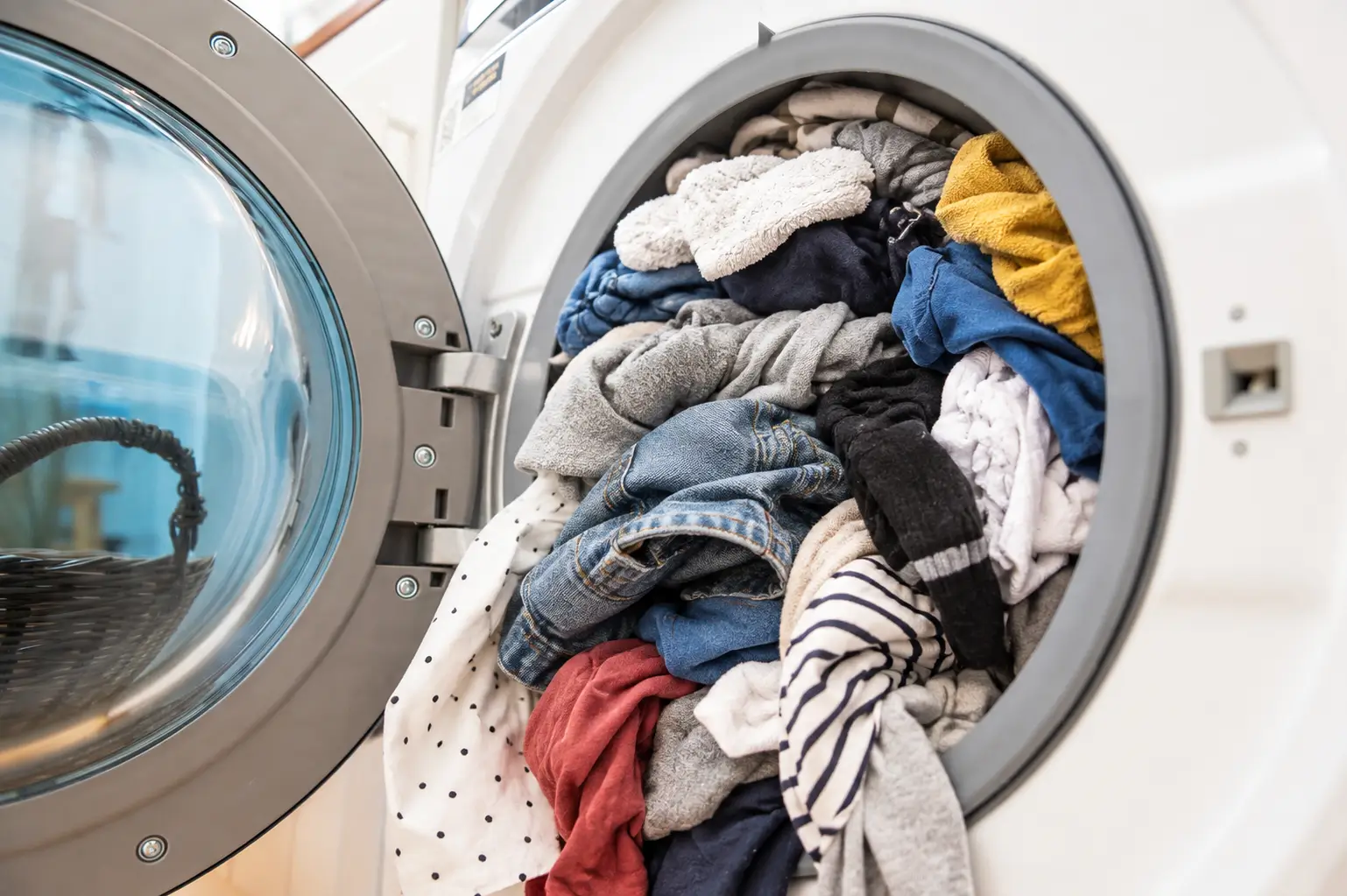
If it fits in the drum, it’ll wash properly. That assumption is exactly why so many loads come out looking worse than when they went in. Water, detergent, and agitation all need room to move through fabric, and when you pack a washer past its real capacity, none of those three things can do their job.
Overloading is one of the most common laundry mistakes that damage clothes and home essentials, and it’s easy to miss because the damage builds slowly, wash after wash. Here’s exactly what’s happening, and how to tell if you’re doing it right now.
Your Clothes Don’t Actually Get Clean
Clean clothes need room to move. When you overload the drum, garments compress into a mass. Water flows around the load instead of through it, and detergent spreads unevenly.
What goes wrong:
- Water cannot reach every fabric layer.
- Detergent cannot dissolve and circulate.
- Loosened soil cannot rinse away completely.
Look for the evidence:
- Whites develop a gray or dingy cast.
- Collar and underarm marks survive the wash.
- Clothes emerge with stale odors or detergent streaks.
Make the correction: Split an oversized load into two smaller loads. You may run one more cycle, but you will avoid washing items that never had enough room to get clean.
Detergent Residue Trapped in Fabric Load After Load
An overloaded drum restricts rinsing. Packed garments block water from moving through the fibers, so detergent remains trapped instead of flowing down the drain.
The damage develops gradually. Each overloaded cycle leaves behind another thin layer.
Look for these warning signs:
- Towels feel stiff or scratchy.
- Dark clothes show pale streaks.
- Whites and colors appear dull.
- Shirts feel coated rather than clean.
Make the correction: Reduce the load and measure detergent carefully. Clothes need space to separate, circulate, and release residue. If you suspect buildup, rewash the affected items in a smaller load without adding detergent. Select an extra rinse to help flush the fibers clean.
Fabric Abrasion, Pilling, and Premature Wear
Agitation should move clothes through water and detergent. When you overload the drum, garments press and scrape against one another instead. Zippers, buttons, and rough seams intensify that friction.
The damage follows a clear pattern:
- Friction lifts and breaks surface fibers.
- Loose fibers form pills.
- Repeated rubbing thins the fabric.
- Weakened areas eventually split or form holes.
The result: Clothes that should last for years may look worn within months.
Where the Wear Shows Up First: Shoulders, Elbows, and Knees
These high-contact areas already absorb stress during wear. A crowded wash cycle adds more friction, accelerating damage where the fibers may already be vulnerable.
Inspect these areas closely:
- Shoulders: look for fuzziness near seams.
- Elbows: check for thinning or a slight shine.
- Knees: watch for pills, weak spots, or tiny holes.
Make the correction: Wash smaller loads, separate heavy items from lightweight garments, and close zippers before washing. Turn delicate or pill-prone pieces inside out. If clothes can move freely, water carries them through the cycle with less grinding contact, and less premature wear.
Zippers, Buttons, and Hardware Under Constant Pull
Buttons, zippers, snaps, and hooks attach at concentrated stress points. When you overload the drum, garments twist together and pull against those closures instead of moving freely.
Check for visible damage:
- Loose or missing buttons.
- Bent zipper pulls or misaligned teeth.
- Detached snaps and stretched buttonholes.
- Small tears where hardware meets fabric.
Make the correction: Reduce the load so each garment can move independently. Close zippers, open shirt buttons, secure hooks, and place delicate pieces in mesh bags. Separate heavy jeans and towels from lightweight clothing to prevent their weight from pulling on smaller closures.
The Machine Itself Wears Out Years Earlier Than It Should
Your washer also pays for every overloaded cycle. Excess weight can unbalance the drum and force the motor, bearings, belts, and suspension system to work harder than intended.
Watch for these warnings:
- Loud banging or repeated thumping.
- Strong vibration during spinning.
- A washer that shifts across the floor.
- Clothes that remain unusually wet.
Make the correction: Stop the cycle, remove items, and redistribute the load. Follow the manufacturer’s capacity guidance, not whether or not the door closes. Wash bulky bedding separately; one wet item can strain or unbalance the drum even when the machine looks half full.
Uneven Drying That Adds Heat Damage on Top of Everything Else
When you transfer a tangled, oversized wash load into the dryer, garments remain compressed in dense bundles. Air moves around those bundles instead of through them, leaving the center damp while exposed fabrics continue absorbing heat.
Look for these warning signs:
- Damp cuffs, waistbands, or pockets.
- Dry outer layers wrapped around wet clothing.
- Repeated dryer restarts.
- Clothes that feel unusually hot.
Extra heat can fade color, shrink fibers, weaken elastic, and leave fabric brittle.
Make the correction: Shake out each item and split a large wash load into smaller dryer loads. Use the lowest effective heat setting and give bulky pieces enough room to unfold.
Why You Might Not Notice Any of This for Months
Overloading rarely ruins a garment after one cycle. It shortens its useful life gradually, making the pattern easy to miss.
The evidence appears in stages:
- Shirts lose brightness.
- Towels feel rougher.
- Elastic stops recovering.
- Seams, elbows, and knees begin to thin.
- Pills or holes appear sooner than expected.
Compare frequently washed clothes with similar pieces you wear less often. If high-use items show concentrated fading, thinning, or distortion, your laundry routine may be accelerating the wear. Reduce the load now; you do not need to wait for obvious damage.
How to Load Correctly Going Forward
Use a consistent loading routine:
- Check the correct limit. Follow your washer manufacturer’s capacity guidance. As a practical rule, keep a top-loader around three-quarters full and leave a hand’s width of space above a front-loader load.
- Sort by fabric weight. Towels, jeans, and bedding absorb substantial water and become heavier during the cycle. Wash them separately from lightweight shirts and everyday clothing.
- Split borderline loads. When you feel unsure, run two smaller loads. Clothes clean and rinse more effectively when they have space to circulate.
- Adjust the detergent dose. Measure detergent according to the load size, soil level, water hardness, and product directions. A smaller load usually requires less, not the same habitual pour.
Final check: Garments should sit loosely. If you must push them down or force the door closed, remove several items.
What to Do About Clothes Already Showing Overloading Damage
Some of this is reversible. Dulling and detergent buildup respond well to professional cleaning that can strip residue a home wash cycle can’t reach, and pilling on an otherwise sound garment can often be improved with the right finishing care.
Structural damage doesn’t reverse. Once fibers have thinned or broken, no cleaning process restores them, and a garment with real fabric breakdown at the shoulders, elbows, or knees is past the point professional care can fix. The realistic goal at that stage is protecting what’s left of the garment’s life, not restoring it to new.
Give Your Clothes More Room and Better Care, Call Pristine Fine Dry Cleaning
Even familiar laundry habits can slip when the week gets busy. Pristine Fine Dry Cleaning removes that concern by weighing each load, matching it to the machine’s capacity, and measuring the detergent carefully, never overcrowding garments simply to finish faster.
Pristine Fine Dry Cleaning provides the dependable Wash and Fold laundry Service Lely, Florida households need to keep laundry from taking over the week. Arrange a FREE scheduled Pickup and Delivery Service or drop off your next bundle at either Naples location.
Downtown Naples
Address: 506 9th Street N, Naples, Florida, 34102
Phone: +1 239-429-0137
Tamiami Trail
Address: 4596 Tamiami Trail N, Naples, Florida, 34103
Phone: +1 239-237-3029
FREE Pickup and Delivery Service
Phone: (239) 788 0360
Email: customercare@lookpristine.com